Happy Trace: A Font That Teaches While It Designs
There's a particular kind of frustration that comes with trying to create educational materials for young learners. You want something that looks polished and professional, but also serves a genuine teaching purpose. Most fonts force you to choose between aesthetics and function—you either get something beautiful that requires manual line-drawing in a design app, or you get something utilitarian that looks like it was pulled from a 1990s worksheet template. Happy Trace bridges that gap in a way that feels almost obvious once you start using it.
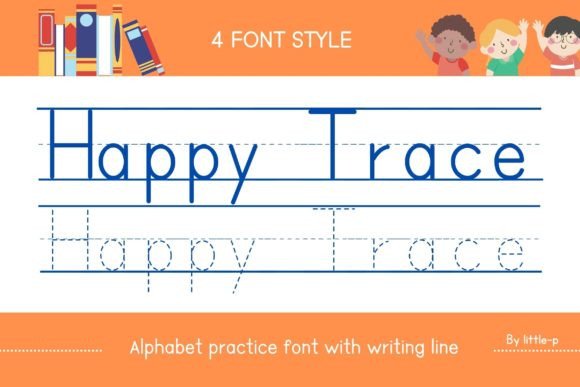
At its core, Happy Trace is a creative educational typeface built around a simple but powerful idea: the letters themselves should guide the learning process. What sets it apart from other display fonts or handwritten fonts you might encounter is its built-in writing lines. When you type a letter, the font renders it on top of guide lines—those familiar top, middle, and bottom boundaries that children use when learning to form letters. And here's the part that makes designers smile: pressing the spacebar generates those writing lines automatically. No extra shapes to draw, no alignment headaches, no tedious manual work in Illustrator or Canva.
Four Styles That Actually Work Together
Happy Trace ships with four distinct styles—Regular, Bold, Letter-line, and Dash-line—each serving a different purpose in the educational design workflow. The Regular and Bold styles give you clean, confident letterforms that work beautifully for headers, titles, and any context where you want the font's personality without the instructional lines. Think of them as your branding-friendly options: they carry the same visual DNA as the lined versions but sit comfortably in marketing materials, social media graphics, or packaging design for children's products.
The Letter-line style is where the teaching magic happens. Each character appears with its full set of writing guides, showing students exactly where a letter sits on the baseline, how far it ascends, and where the midline falls. For a first-grade teacher building a custom alphabet worksheet, this means typing out a word and having a perfectly formatted practice sheet ready in seconds. The Dash-line style takes a different approach, presenting letters as dotted outlines that students can trace directly. It's the kind of detail that separates a rushed handout from a thoughtfully designed learning tool.
What makes these four styles particularly useful is their visual cohesion. They share the same proportions, the same stroke weight logic, and the same friendly, approachable character. You can mix them within a single document—a bold header in the Regular style, traced examples in Dash-line, blank practice rows using Letter-line—and everything looks intentionally designed rather than cobbled together from mismatched assets.
Where This Font Actually Shines
If you're a small business owner running a tutoring center, a homeschool parent creating custom curriculum, or a teacher who's tired of generic worksheet websites, Happy Trace solves a real problem. But its usefulness extends well beyond traditional classrooms.
Consider a children's book publisher designing activity pages. Instead of commissioning custom illustrations for every tracing exercise, the design team can type directly in their layout software and get print-ready results. A children's brand developing packaging for educational toys could use the Regular or Bold styles to maintain a playful, learning-oriented aesthetic across product boxes, instruction cards, and marketing inserts. The font's personality reads as encouraging and approachable—exactly the tone you want when your audience is five years old and holding a crayon.
Social media content creators in the education space benefit enormously from this kind of tool. Instagram posts showing letter formation, Pinterest pins with printable worksheets, TikTok thumbnails advertising learning resources—these all need typography that immediately communicates "this is for kids" without looking amateurish. Happy Trace delivers that balance. The letterforms are rounded and friendly, avoiding the cold precision of a sans serif font while steering clear of the overly casual feel that some script fonts and handwritten fonts bring to the table.
Digital product creators on platforms like Etsy or Teachers Pay Teachers will find this font especially practical. Building a printable alphabet workbook becomes dramatically faster when you don't have to manually add writing lines in your design software. Type your content, adjust your layout, export. The font handles the instructional formatting that would otherwise eat up hours of production time.
Making Smart Typography Choices
Choosing the right font style within Happy Trace depends entirely on your project's goal. If you're designing a brand identity for a children's education company, start with the Regular or Bold styles for your logo and primary headings. These versions give you the font's distinctive personality without the instructional lines, which means they work in contexts where you need to look professional and trustworthy to parents—think website headers, business cards, and email newsletters.
For actual educational materials, the Letter-line and Dash-line styles become your workhorses. Use Letter-line when you want to show students the correct letter placement. Use Dash-line when you want them to trace. A well-designed worksheet might use both: Letter-line for a demonstration row at the top of the page, Dash-line for guided practice in the middle, and blank writing lines (created with just the spacebar) for independent work at the bottom. That progression from guided to independent practice is a proven teaching strategy, and the font makes it effortless to implement visually.
Font pairing is worth considering if you're building materials that mix instructional content with regular text. Happy Trace's Regular and Bold styles pair well with clean sans serif fonts for body copy—think something like Open Sans or Lato for instructions and explanations, with Happy Trace handling the letter-focused content. This contrast keeps your layouts readable while maintaining a cohesive, approachable feel. Avoid pairing it with highly decorative display fonts or ornate script fonts, which would compete for attention and create visual clutter.
Practical Details Worth Knowing
Before you commit to any font for a commercial project, licensing matters. Happy Trace is designed as a commercial font, meaning you can use it in products you sell—worksheets, educational resources, branded materials, merchandise. Always review the specific license terms to understand what's covered, especially if you're planning to distribute the font files themselves (which most licenses prohibit) versus using the font to create and sell end products (which is typically allowed).
Readability is another consideration that deserves honest attention. Happy Trace's letterforms are designed for clarity, with open counters and generous spacing that work well at larger sizes. For very small text—say, 10-point body copy on a dense worksheet—the instructional styles might feel busy. In those cases, reserve the lined versions for display-sized examples and switch to the Regular or Bold style for smaller instructional text. This is standard practice with any display font or creative font: use it where it has room to breathe, and let a more neutral typeface handle the dense stuff.
One practical tip worth testing: the spacebar-generated writing lines work beautifully in most design applications, but it's worth doing a quick test in your specific software before committing to a large project. Layout tools like Adobe InDesign, Illustrator, and Canva handle OpenType features differently, and a five-minute test can save you from discovering compatibility issues after you've built a 30-page workbook.
The Bigger Picture for Creative Professionals
Fonts like Happy Trace represent a shift in how we think about design assets. They're not just aesthetic choices—they're functional tools that solve specific problems. For designers working with educational clients, this kind of typeface becomes a genuine competitive advantage. You can deliver custom worksheets, branded learning materials, and polished educational content faster and more consistently than someone cobbling together free resources from the internet.
For content creators and small business owners, it's about efficiency and quality. The time you save not drawing guide lines manually is time you can spend on curriculum development, marketing, or actually teaching. And the visual consistency that comes from using a single, well-designed typeface across all your materials builds brand recognition in ways that a hodgepodge of free fonts never will.
Modern typography rewards intentionality. The fonts you choose signal something about your brand, your audience, and your attention to detail. Happy Trace signals that you care about the learning experience—that you've thought about how a child's eye moves across a page, how a teacher structures a lesson, and how a worksheet transitions from guided instruction to independent practice. That kind of thoughtfulness shows up in the final product, and audiences—whether they're parents, school administrators, or fellow educators—notice.