Chalkboard 2.0: A Typeface with Personality
You know that feeling when you walk into a cozy café and see the hand-lettered specials board? Or when a back-to-school campaign catches your eye because it feels warm and approachable rather than stiff and corporate? That's the magic a great chalk-style font brings to the table. And if you've been searching for one that actually looks authentic without sacrificing versatility, Chalkboard 2.0 deserves a closer look.
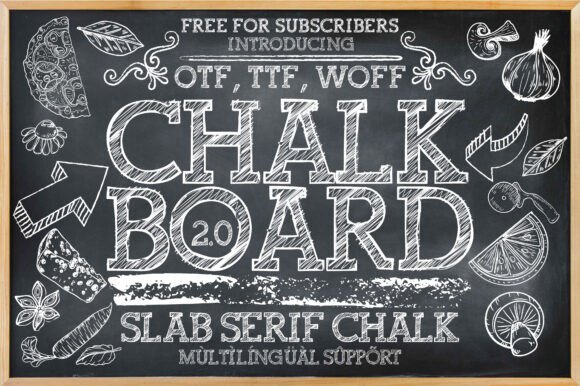
This isn't your average novelty typeface. Chalkboard 2.0 is a slab serif with a hand-drawn chalk texture baked right into its DNA. It carries the structural confidence of a traditional serif — solid, balanced, easy to read — but layers in the imperfect, organic charm of something sketched by hand. The result is a typeface that feels simultaneously polished and personal, which is a surprisingly rare combination in the world of display fonts.
Where Rough Texture Meets Refined Design
What sets this typeface apart from dozens of other chalk-inspired fonts floating around design marketplaces? A few things. First, the chalk effect doesn't compromise legibility. You can set it at a headline size on a poster or scale it down for a menu header, and the letterforms remain clear and distinct. That's a real concern with textured fonts — many of them look gorgeous at 120 pixels but turn into an unreadable smudge at 36. Chalkboard 2.0 handles both ends of the spectrum gracefully.
Second, the slab serif foundation gives it a sense of authority that purely handwritten fonts often lack. A casual script font might work beautifully for a bakery logo, but it can feel too whimsical for a brand that needs to project reliability. Chalkboard 2.0 threads that needle. It's friendly without being childish, rustic without being sloppy. Think of it as the typographic equivalent of a well-worn leather apron — practical, characterful, and trustworthy.
Real-World Applications That Actually Work
Let's talk about where this font shines, because the use cases go far beyond "cute chalkboard signs." Here are some directions worth exploring:
- Restaurant and café branding: Italian trattorias, brunch spots, juice bars, bakeries — any food business that wants to communicate warmth and handcrafted quality. Use it for menu headers, window signage, loyalty cards, and branded packaging. The chalk texture pairs naturally with kraft paper and matte finishes.
- Logo design: For small businesses in the food, education, or lifestyle space, Chalkboard 2.0 can serve as a primary wordmark or as a supporting display font alongside a cleaner sans serif. It gives a logo instant personality without needing elaborate illustration.
- Social media graphics: Instagram carousels, Pinterest pins, and Facebook ads all benefit from typography that stops the scroll. The textured, handcrafted look of this font stands out against the sea of clean geometric sans serifs dominating most feeds. It's especially effective for quotes, announcements, and promotional posts.
- Packaging and merchandise: Artisan products, small-batch goods, and handmade items often need a typeface that signals authenticity. Chalkboard 2.0 works on labels, tags, tote bags, mugs, and sticker sheets — anywhere you want the design to feel personal rather than mass-produced.
- Invitations and event materials: Birthday parties, baby showers, rustic weddings, school events, community fundraisers. The font sets a relaxed, welcoming tone before guests even read the details.
- Blog headers and digital products: If you sell printables, worksheets, planners, or educational resources, this typeface adds a tactile quality to digital files. It makes screen-based content feel more like a physical object, which can increase perceived value.
- Editorial design and posters: Magazine feature headers, event posters, and flyer headlines benefit from a display font that carries visual weight and texture. Chalkboard 2.0 pairs especially well with photography, adding contrast and warmth to image-heavy layouts.
Pairing Chalkboard 2.0 with Other Fonts
No typeface works in isolation. The real power of any display font comes alive through thoughtful pairing. Because Chalkboard 2.0 has a bold, textured personality, it works best alongside typefaces that complement without competing.
For body text, lean toward a clean, neutral sans serif — something like a modern grotesque or a humanist sans that stays out of the way. The contrast between the chalky slab serif headlines and the crisp body copy creates a natural visual hierarchy that guides the reader's eye.
If your project calls for a more layered typographic system, consider adding a simple script font for accents — a signature-style element, a tagline, or a call-to-action phrase. Just be careful not to stack too many textured or decorative fonts together. One star per stage, as the saying goes. Chalkboard 2.0 should be the most expressive voice in the room, with supporting fonts playing quieter roles.
Always test your pairings in context. Drop your headline and body text into the actual layout — a mockup of the menu, the social media template, the product label — before committing. Fonts that look great side by side in a specimen sheet can clash or get lost once you add color, imagery, and real content.
Practical Considerations Before You Commit
A few things worth checking before you build an entire brand identity around this or any premium font:
- Review the full character set. Does it include the glyphs you need? Accented characters for multilingual support, numerals, punctuation, ligatures, and alternate styles all matter. Chalkboard 2.0 includes multiple styles, so take time to explore what's available and how each variation might serve different parts of your project.
- Check the commercial license. If you're using the font for client work, merchandise, or products you sell, make sure the license covers your intended use. This is a step many designers skip, and it can create headaches later. Read the terms, understand the scope, and keep your purchase records organized.
- Test readability at your target size. Set actual content — not just "Lorem ipsum" — at the sizes you'll use. Restaurant menus get read in dim lighting. Social media graphics get viewed on small phone screens. Posters need to communicate from across a room. Make sure the font holds up under real conditions.
- Consider your color palette. Chalk textures look dramatically different on dark backgrounds versus light ones. On a dark surface, the font mimics real chalk writing — white or light-colored text with subtle texture. On a light background, the effect is more subtle. Experiment with both directions before settling.
Building Visual Consistency Across Touchpoints
One of the most overlooked benefits of choosing the right display font early in a branding process is the consistency it creates. When you use Chalkboard 2.0 across your menu, your Instagram templates, your packaging, your website banners, and your printed materials, customers start to recognize your visual language before they even read the words. That kind of instant recognition is what separates a business with a brand from a business with a logo file sitting on someone's desktop.
The key is restraint. Use the font strategically — for headlines, key messages, and brand touchpoints where personality matters most. Don't set your entire website in it, and don't plaster it on every surface. Let it do its job as a signature element, and give it room to breathe.
Typography is one of the most cost-effective tools in any designer or business owner's toolkit. A single well-chosen typeface can unify a visual identity, communicate values without a single word of copy, and make a small brand look like it belongs on the same shelf as established competitors. Chalkboard 2.0 brings that kind of potential — warmth, character, and versatility in a single package. Whether you're refreshing a café's look, launching a product line, or building a social media presence from scratch, it's the kind of font that earns its place in your design assets folder and stays there for years.